

Ebike Industry Updates

Ebike Industry Press Releases and News Articles from the best journalist and bloggers worldwide. Stay updated on all ebike news from every online source, on eBikeLink.

Have You Seen This? Bakcou Timberwolf Is a Huge AWD Scooter

Imagine an e-scooter. Imagine going off-road. On youre-scooter. You might have gotten stuck at that last suggestion because most scooters—electric or otherwise—have wheels the size of what we put on suitcases. Small wheels aren’t great for unpaved surfaces, which is where theBakcou Timberwolffigures.

Bakcou, whose name comes from backcountry, has introduced an electric scooter with wheels and tires big enough to go offroad. The Timberwolf has a 24-in. wheel in front, with a 20-in. wheel in the rear. The tires are 4-in.-wide knobbies, perfect for going offroad.

It is equipped with not one, but two, 750W Bafang hub motors. They are powered by a whopping 1008Wh battery, which seems huge (okay, it is objectively huge), but considering that it is powering two motors rather than one, and considering that most riders will be using the throttle full-time, range won’t be as enormous as you might expect. Bakcou indicates a top speed of 20+ mph, which suggests it has a mode that will allow it to go faster than 20 mph, but they don’t go into detail on the site.

Bakcou specs a GT MRK coil-spring suspension fork with 110mm of travel to help soak up the bumps so your knees don’t have to do all the work. Because of the deck you stand on, ground clearance is an issue for the Timberwolf in a way it is not with an e-bike. It offers 6 in. of clearance below the deck, which means that any rocks or roots someone rides over will, hopefully, be less than 6 in. tall.

It features Tektro hydraulic disc brakes both front and rear and they are matched with 203mm rotors, which is the largest size you can get for an e-bike. This e-scooter won’t have any trouble stopping—as long as it’s on solid ground.

The max load for the Bakcou Timberwolf is 320 lbs., though they say that depends on the terrain. Reading between the lines, that suggests that on a steep enough uphill, the two motors may not be able to produce enough torque to move that much weight. The weight of the scooter is a factor in this. Because it has that ginormous battery and two motors, it weighs 90 lbs. Should you need to pick it up, removing the battery will drop the weight to 79 lbs.

Racers Rejoice: Shimano Unveils EP801 Update

Some links may be affiliate links. We may get paid if you buy something or take an action after clicking one of these.

Shimano’s new update allows more boost, smoother power cutoff and adjustable carryover assist.

Shimano has just announced an update to their race-winningEP801 motor. The update will increase the power available to riders, how the motor assistance decreases when a rider reaches the motor’s max assistance speed, as well as how long the motor’s carry-over assist lasts once the rider stops pedaling.

The best part? This is available to everyone with an e-bike equipped with the EP801 motor. This is possible because the changes come in the form of a firmware update.

The biggest change this firmware update gives riders is more power in Boost mode. Shimano says riders will be able to reach a 400 percent assist ratio with ease—making the most of the EP801’s 600W max output. This means a more immediate response to pedal input and improved acceleration, as well as max torque on command.

For anyone who has ever been annoyed by the way their motor shut off once they reached its maximum assist speed, this update allows riders to customize the manner in which the power ends. Whether someone wants max power right up to cutoff or they want it to taper off to give them some warning, the motor’s behavior can be tailored to your preference.

Shimano says the most exciting new feature is the extended assist carryover. How long the motor continues to produce power after the rider stops pedaling can now be adjusted according to the rider’s needs based on terrain, race-specific needs or the rider’s riding style and what feels natural.

Racers Rejoice: Shimano Unveils EP801 Update

Saris 6-Bike Tailgate Pad Review | Haul More, Worry Less

Between morning rides before work and coaching my kids’ NICA rides, I spend more time than my back would like hoisting bikes into the bed of my truck. Over the years (and 4 or 5 tailgate pads later), I’ve become all too familiar with what a good tailgate and not-so-good tailgate pad has to offer.

Hauling multiple bikes in your truck without them toppling over, scratching each other, or causing a tangled mess is a real struggle. Finding the perfect tailgate pad that fits your truck and can securely carry up to six bikes without damage seems almost unheard of.

Ever wonder what happens when you walk into a bike shop and grab any ol’ tailgate pad without doing any research? You might end up with a tailgate pad on a full-size truck that was probably made for a mid-size. Ask me how I know.

Picture a fat guy in a little coat (RIP Chris Farley).

Sure, he’s wearing a coat, but the sleeves are too short, and if he sneezes, some seams might split. Does it bother me? Yes, every day. Don’t be like me.

Determined not to make that mistake again, I was pumped to see the Saris 6-Bike Tailgate Pad come across my desk for testing.


Portland to Launch E-Bike Rebate Program in 2025

Portland, Oregon will soon have its own e-bike rebate program. Portland’s program will be run by the Portland Clean Energy Community Benefits Fund Climate Investment Plan (PCEF). The plan, which was implemented in 2023 calls for $750 million to be invested in programs for black and indigenous people of color, as well as low-income Portlanders, all with the intent to fight climate change.

Of that $750 million, $20 million has been designated for an e-bike rebate program. Compare that with the $1 million that Atlanta set aside.

The Portland Bureau of Planning and Sustainability (BPS) will administer the program and they have been authorized to hire staff and/or organizations to implement the program.

Seetha Ream-Rao leads the transportation decarbonization programs for the PCEF. In presenting the program to the city council she framed it as being, “Absolutely essential to meeting Portland’s net zero goals.”

To bolster her case, she cited a recent Oregon Household Activities Survey that revealed the average daily trip in the Portland metro area was just 6 mi. and 80 percent of those trips are conducted by car (that 20 percent are conducted by means other than vehicle is impressive).

Ream-Rao said, “That [distance] is well within the range of any e-bike on the market today and one of the biggest opportunities for carbon reductions.”

E-Bike Ownership Less Correlated To Income Than Acoustic Bikes

Some links may be affiliate links. We may get paid if you buy something or take an action after clicking one of these.

E-bike ownership skews young, as does participation in bike share programs, while conventional bike ownership skews toward affluent, educated men.

A recent study considered whether there was a relationship between income level and whether an individual owned an e-bike or an “acoustic” bike—a regular, non-motorized bike, that is. The research, published in theJournal of Transport and Health, focused on the population of Sydney, produced some surprising findings.

Young adults aged 25-34 were found to have the highest rate of ownership of e-bikes as well as the highest rate of participation in bike share programs. They also had a lower rate of conventional bike ownership.

Regular bike ownership skewed toward those who were male, young, highly educated and affluent. No surprise there.

The study found that factors such as being foreign-born, paying rent (rather than a mortgage) and living in an apartment reduced the likelihood of owning a bike, whether conventional or electric.

Sponsor

E-Bike Ownership Less Related to Income Than Acoustic Bikes

Demand Outstrips Supply in Atlanta E-Bike Rebate Program

Some links may be affiliate links. We may get paid if you buy something or take an action after clicking one of these.

Atlanta’s e-bike rebate program received more than 4,500 applications in the first 12 hours the page was live.

The city of Atlanta found out just how popular theire-bike rebate programwas when it went live on June 16. In a bit more than 48 hours the program received 4867 applications. The program was funded with a $1 million investment from the city of Atlanta and was intended to provide affordable transportation options for low-income residents. A whopping 4,500 of those applications were filed within the first 12 hours after the web page went live.

By the time the application window closed on June 23, the city had received nearly 9000 applications.

Depending on your view, that is either good or bad news, possibly both. The overwhelming response shows just how keen people are to add an e-bike to their transportation options, which is certainly good. The bad news is that only 700 rebate vouchers are available in this first round.

Income-qualified Atlanta residents (those who demonstrate they meet the threshold to qualify as low income) can receive a rebate certificate good for $1,000 off a regular e-bike or $2,000 off a cargo e-bike. Residents who exceed the income threshold can receive a rebate of up to $500 for an e-bike or $1,000 for a cargo e-bike.

The first round of rebates should be distributed to recipients by the end of July. Recipients will have six weeks to purchase their e-bike from a qualified Atlanta retailer.


Silicon Anodes, and why every battery will be using them

Batteries have reached a tipping point this year because silicon anodes are actually being produced and they do two things. They double the range of battery packs, and they allow incredibly fast charging.

First let me say that just about any advance in batteries involves some basic chemistry that was known decades ago. Lithium, Silicon, Sodium, and Sulfur were all identified as fantastic battery materials. However, the problem is always in the details. All of these have been experimented with, and it was just sheer luck that in the 1990’s Lithium-Ion cathodes and graphite anodes turned out the be the first big combination that worked well, and could be scaled-up to mass production at an affordable price.

For instance, even with the chemistry options set aside, we have been promised “Solid State Batteries” for over a decade. They actually exist in labs already, along with very expensive samples working right now on the International Space Station. The problem is in figuring out how to mass-produce large SSB’s, and to do it cheaply.

The majority of research during the early 2000’s has been on improving the positive Cathode, by tweaking the lithium chemistry with “NCM” which is Nickel, Cobalt, and Manganese. Great efforts have gone into reducing the amount of Cobalt used because it is rare, and much of it is mined under horrible conditions in Africa. Back in 2019, we wrote about how NMC532 cathodes (5% Nickel, 3% Manganese, and 2% Cobalt) now look like they would last 20 years of use (to see that article, click here). I noticed in the documents I researched, that this three-additive chemistry group is often called a “Ternary” chemistry, which means a group of three components.

About ten years ago, a massive amount of money started to flow into research on the anodes of batteries, the “negative” electrode. This research is ongoing, but a few years back, silicon had a breakthrough, and now everyone is jumping on it, because the immediate effect is that the batteries are doubling their capacity, and charging times are shockingly fast (with future improvements being likely). The chart above represents thousands of patents that have been filed concerning the materials and processes that would allow silicon anodes to work.


Check This Out: Bianchi’s Oltre Weighs Just 24 Pounds

Some links may be affiliate links. We may get paid if you buy something or take an action after clicking one of these.

The famed Italian brand has introduced a road e-bike that weighs just 24 lbs. and its Mahle X30 hub produces a spirited 45Nm of torque.

Bianchi is one of the oldest, possibly, the oldest, bike brands in the world with a history that dates back to 1885. Their top-of-the-line carbon fiber road bike is the Oltre, a beauty with clean lines and a Tour de France pedigree.

And now, for everyone who needs some help going 20 mph, the Bianchi E-Oltre adds the Mahle X30 hub motor to yield one of the lightest e-bikes on the market—just 11kg (24.2 lbs.)—light enough to rival Trek’s Domane+ SLR. It wasn’t that many years ago that a racing bike weighed 24 lbs.

The Mahle X30 hub in the E-Oltre produces 250W and 45Nm of torque. It’s unlikely that another e-bike could put this hub to use as well as the E-Oltre; 45Nm of torque will see this e-bike accelerate like other e-bikes with much bigger motors while still retaining the feel of a regular road bike. This may be as close as some of us come to keeping the cake we are eating.

The Mahle X30 hub draws its power from a 250Wh internal battery that Bianchi says can offer as much as 90km (56 mi.) range on a single charge. It seems unlikely that such a small battery has ever accounted for so much range. Mahle makes a range-extending battery that is estimated to add another 55km (34 mi.).

Bianchi offers the E-Oltre in seven different sizes to give riders an optimal fit. They also make it in three different versions. One is equipped with Shimano’s 105 group and goes for around $5,500. There’s one with Shimano’s Ultegra Di2 electronic shifting that runs close to $7,000, while the top-of-the-line version with Shimano’s Dura-Ace Di2 goes for close to $11,000.


Key Considerations for Battery Upgrades

Key Considerations for Battery Upgrades 1. Compatibility Electrical Compatibility: Ensure the voltage and current ratings of the new battery match your dirt bike's motor and controller specifications.Physical Fit: Check the dimensions of the new battery to confirm it fits within the existing battery compartment or mounting system.Connectors and Wir...

Pinion’s Motor Gearbox Unit Gets Big Update

Some links may be affiliate links. We may get paid if you buy something or take an action after clicking one of these.

Completely automatic shifting comes to this combination mid-drive motor/gearbox while still offering riders adjustability and manual override.

Pinion made a big splash with the introduction of the Motor Gearbox Unit, or MGU. The MGU is a first in the e-bike world—a transmission that combines multiple gears with a mid-drive e-bike motor. Now they are announcing a new update that will make what was already one of the most-coveted e-bike motors even more attractive—automatic shifting.

Automatic shifting is a software update that improves upon what Pinion already offered with the MGU. Previously, Pinion offered a mode called Pre.Select that would change gears while the rider was coasting. I would compare the rider’s speed compared to a preset target cadence and then select the gear most appropriate to that cadence. Now Pinion has added two more shift modes, Auto.Shift and Auto.Shift.Pro.

With Auto.Shift the MGU automatically shifts—even under a full pedaling load. Pinion is careful to note that the automatic shifting isn’t predictive, but instead is reactive. The system monitors a number of inputs, according to Pinion, and while they don’t detail those inputs, it’s easy to connect the dots and conclude that some of those inputs would be cadence, speed and the amount of torque the rider is exerting on the pedals.

Because cadence is to some degree a matter of personal preference and riding style, Pinion allows a rider to define their preferred cadence range so that the MGU doesn’t shift at cadences above or below the rider’s preferred range. They can do this dynamically while riding with the TE-1 E-Trigger.

Pinion also offers Auto.Shift.Pro which allows riders to override the gear that the Pinion MGU has selected by using the E-Trigger. Pinion says this allows a rider to derive all the assistance of an automatic transmission without losing the dynamic edge that comes with shifting manually.


McKinsey Predicts Booming $520 Billion Micro EV Market By 2035

Some links may be affiliate links. We may get paid if you buy something or take an action after clicking one of these.

The management consultants believe the market will grow by $180 billion by the end of the decade and then another $180 billion in just five more years.

Management consultantsMcKinsey and Companyhave released a market analysis for the micro-EV industry. They anticipate explosive growth for the entire segment, which is dominated by e-bikes, but also includes scooters and devices such as one-wheels.

These numbers reflect the size of the worldwide market, rather than one region. According to their analysis, they peg the current worldwide market at $160 billion dollars. By 2030, they predict the market will grow by $180 billion to $340 billion. That will grow another $180 billion in just five years to a total of $520 billion.

According to McKinsey, the biggest drivers will be regulation and consumer behavior. Regulation will figure as a driver because of how governments will prioritize forms of transportation that help them meet their climate targets. Subsidies and investment in micromobility infrastructure will help spur consumer behavior.

Currently, five European countries account for a whopping 50 percent of the market, some $29 billion in sales. Germany leads, with France coming in second and the U.K. third.

E-bikes the biggest segment of the European micromobility market, they say; e-bikes account for 40 percent of the total market. They project that e-bike sales will grow by 13 percent annually through 2035.


Califonia Cracking Down on Fast E-Bikes?

Some links may be affiliate links. We may get paid if you buy something or take an action after clicking one of these.

A new bill in California is aimed at outlawing the unrestricted operation of e-bikes and bans the sale of devices that aid a rider in unlocking their e-bike.

A new bill in California appears to be intended to address the growing number of e-bikes that offer unrestricted speed. The actual details of the bill may not provide the sort of solution that lawmakers and communities are looking for.

California Assembly Bill 1774 amends Section 24016 of the Motor Vehicle Code with two new provisions aimed at curbing e-bikes that can exceed 28 mph.

In item (d) the bill states: “A person shall not tamper with or modify an electric bicycle […] so as to change the speed capability of the bicycle, unless the bicycle continues to meet the definition of an electric bicycle […] and the person appropriately replaces the label indicating the classification required[…].”

Item [e] adds: “A person shall not sell a product or device that can modify the speed capability of an electric bicycle such that it no longer meets the definition of an electric bicycle[…].”

Sponsor

Califonia Cracking Down On Fast E-Bikes?

Dirt Bike Trails in Colorado

Colorado is a haven for dirt bike enthusiasts, offering a diverse range of trails that cater to riders of all skill levels. Here are some of the best dirt bike trails in Colorado: 1. Rampart RangeLocation: Near Sedalia, southwest of DenverDescription: A well-known trail system with over 100 miles of trails, offering a mix of easy to challenging rid...

Electric Dirt Bike History

The history of electric dirt bikes is a fascinating journey that reflects broader trends in technology, environmental awareness, and the evolution of motorized vehicles. Here is a detailed look at the history and development of electric dirt bikes: Early Beginnings1970s-1980s: Early Concepts and PrototypesInitial Innovations: The concept of electri...

California Advances Two E-Bike Safety Bills: Will They Make Kids Safer?

Some links may be affiliate links. We may get paid if you buy something or take an action after clicking one of these.

Two bills in California will require kids to take a rider safety course and create an online education manual to teach them how to safely operate an e-bike.

California may soon have two new laws on the books that aim to make e-bike riding safer for kids. One outlines a program for training kids in safe riding practices and the other provides a training manual for them.

Assembly Bill 2259, which was introduced by State Assembly Member Tasha Boerner of Carlsbad, creates a comprehensive, online training manual for e-bike riders. The idea is that it is for e-bikes what the driver’s education manual is for drivers.

It is designed to work with another bill, AB 2234, known as the San Diego Electric Bicycle Safety Pilot Program. The manual created by AB 2259 will serve as the curriculum for AB 2234.

If the measures pass, they would require children aged 12 and up to take the safety class in order to ride a Class 1 or 2 e-bike. You must be at least 16 years old to ride a Class 3 e-bike.

Assembly member Boerner’s office released a statement in support of the bills:

Two California E-Bike Safety Bills Aim to Make Kids Safer

Charging your ebike

Charging your e-bike is a crucial part of ensuring that you have enough power for your rides. Here are some common and convenient places where you can charge your e-bike: 1. HomeHome ChargingOutlets: Use a standard electrical outlet in your home to charge your e-bike overnight or whenever it's not in use.Charging Stations: If you have multiple e-bi...

RadRunner 3 Plus Vs Specialized Globe Haul ST | Which Wins?

Find out which utility e-bike better handles groceries, kids, and your dollar!

Like the Swiss Army Knife, the modern utility e-bike is designed to be the only bike you’ll ever need. Utility bikes are made to handle all your chores when it seems like you don’t have enough well,hands. Whether that task is grabbing groceries, commuting, hauling kids to school or even loading all your gear for your next big adventure. These bikes combine practicality with power, making them a favorite among commuters, families, and weekend warriors alike.

Today, I’m comparing two popular utility bikes: the Specialized Globe Haul ST and the Rad Power Bikes RadRunner 3 Plus. Both of these bikes are designed to tackle whatever life throws at them. The Globe Haul ST and the RadRunner 3 both offer strong motors, impressive cargo capacities, and solid range, making them ideal for anyone needing a reliable utility bike.

Through our testing and the 200+ miles I’ve ridden on each bike, I’ve grown to appreciate both. While I do have a personal favorite, I often find myself recommending the other more frequently. So, let’s dive into the specs, features, and real-world testing data of these two utility e-bikes to see how I came to this conclusion.

Sponsor

Sponsor

Specialized Globe Haul STRad Power Bikes RadRunner 3
Testing Results
Range Test – Maximum PAS38 miles in PAS 126 miles in PAS 1
Range Test – Minimum PAS54.34 miles in PAS 560 miles in PAS 5
Hill Test – Throttle1:05 – 16.7 MPH1:24 – 12.9 MPH
Hill Test – Pedal1:00 minutes – 18.1 MPH1:48 – 10 MPH
Speed TestNo PAS: 11.2 mph
PAS 1: 13.4 mph
PAS 2: 16 mph
PAS 3: 20.5 mph
PAS 4: 23 mph
PAS 5: 26.5 mph
No PAS: 7.5 mph
PAS 1: 8.9 mph
PAS 2: 12.9 mph
PAS 3: 18.1 mph
PAS 4: 20.2
PAS 5: 20.2
Brake Test15’ 9”20’ 8”
Electrical
Motor700W, 90Nm torque – Rear Hub w/ Torque Sensor750W, 64 Nm torque – Rear Hub w/ Cadence Sensor
Battery772Wh672Wh
Charger2 Amp, 48V2 Amp, 48V
Pedal Assist5 Levels5 Levels
DisplayDuo-tone LCDDuo-tone LCD
ThrottlePush ThrottleTwist Throttle
Key Components
FrameAlloyAlloy
BrakesTektro HD-T535 4-piston hydraulic disc brakes w/ 203mm rotorsHD-E350: 2-piston Tektro Hydraulic Disc Brakes w/ 180 mm rotors
DrivetrainmicroSHIFT 9-speed 11-36t cassette, 50t chainringShimano Altus MD310 7-speed 11-34T
Shifters (type)microSHIFT Advent, 9-speedShimano SL-TX50-7R 7-speed
ForkRigidRST Spring Fork, 60 mm travel with preload adjustment and lock-out
Rear SuspensionN/AN/A
TiresCarless Whisper Reflect, 20X3.5”Kenda K905 tires sized at 20″ x 3.3″
HandlebarBMX StyleBMX Style
GripsBlack rubberErgonomic comfort grips made of imitation leather
SaddleSpecialized Body Geometry Comfort GelCushioned saddle, black
KickstandCenter mounted – Moto styleRear Mounted
Rear RackYes – 130lb capacityYes – 120 lb capacity
LightsLED front and backLED headlight, taillight with brake light
UL CertificationYes, 2849 & 2271Yes, 2849 & 2271
Weight & Dimensions
Weight w/battery77 lb65 lb
Battery Weight8.4 lb7.5 lb
Maximum Payload419 lbs350 lbs
Maximum Load On Racks (if applicable)132 lbs120 lbs

Sponsor

Specialized Globe Haul ST battery

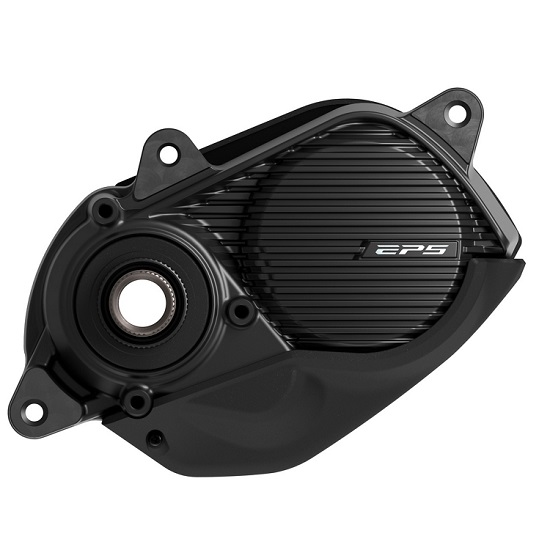
Shimano’s New EP5 and E5100 E-Bike Motors

Some links may be affiliate links. We may get paid if you buy something or take an action after clicking one of these.

Shimano has unveiled two new mid-drive motors, the EP5 and E5100. The EP5 is capable of Class 3 performance while the E5100 is meant for Class 1 and 2 e-bikes.

Shimano has just announced two new motors it has added to its lineup of mid-drive motors, the EP5 and the E5100. Shimano says they “represent a significant step into a new era of e-bikes, empowering riders to explore farther, connect deeper, and experience the power of cycling.”

The 36V EP5 motor produces 250W and 60Nm of torque—no word on max power output yet—and can be configured for use in Class 3 e-bikes with a top-assist speed of 28 mph. It reportedly weighs 3kg (6.6 lbs.).

The 36V E5100 motor produces 250W and a more modest 50Nm of torque. It is designed for use in Class 1 and Class 2 e-bikes with a maximum-assist speed of 20 mph. The motor reportedly weighs 2.4kg (5.3 lbs.).

The motors can be powered by one of three of Shimano’s internal batteries: 418Wh, 504Wh or 630Wh. On the low end, an e-bike with the EP5 motor may see a range of 23km (14.3 mi.) with the 418Wh battery (in Boost mode), while at the high end the 630Wh battery may power the EP5 for as much as 92km (57.2 mi.) (Eco mode).

The E5100 motor may cover as much as 57km (35.4 mi.) with the 41Wh battery (in Boost). With the 630Wh battery, Shimano estimates the E5100 motor may offer an impressive 260km (162 mi.) (Eco mode).

Shimano’s New EP5 and E5100 Motors

ebike Convenience

Electric bikes (e-bikes) offer significant convenience for a wide range of users, from daily commuters to recreational riders. Here are some key points that highlight the convenience of e-bikes: 1. Ease of CommutingAvoid Traffic: E-bikes allow riders to bypass traffic congestion, often using bike lanes or paths, which can result in faster and more ...

Urban Riding

Riding an electric bike (ebike) in an urban environment can be a convenient, eco-friendly, and enjoyable way to commute. Here are some tips and considerations for making the most of urban ebike riding: Benefits of Urban Ebike RidingEfficiency and SpeedFaster Commutes: Ebikes can often cut down on commute times, especially in congested areas.Avoid T...


eBikeLink.com